Need shoulder surgery? The robot will see you now at this Lakewood hospital
AI-generated summary reviewed by our newsroom.
- Lakewood hospital debuts robotic-assisted reverse shoulder replacement surgery.
- Surgeon cites improved accuracy and potential faster recovery.
- Program builds on prior robotic hip and knee work, using 3D CT planning.
A local health system is leading the way with new robot-assisted technology when it comes to shoulder-replacement surgery for local patients.
Virginia Mason Franciscan Health recently announced it has introduced advanced robotic-assisted technology for reverse shoulder replacement surgery to the region.
Reverse is one of two types of replacement surgery techniques used to treat patients suffering severe pain from damage/injury to the joint.
For now, only a limited number of hospitals and medical centers across the country offer the advanced robotic procedure. The first surgery in this region, according to VMFH, was performed in February at St. Clare Hospital in Lakewood, A VMFH site.
Dr. Jacob Gorbaty, who performed the surgery, is an orthopedic surgeon specializing in sports medicine and shoulder surgery and has since performed five such operations.
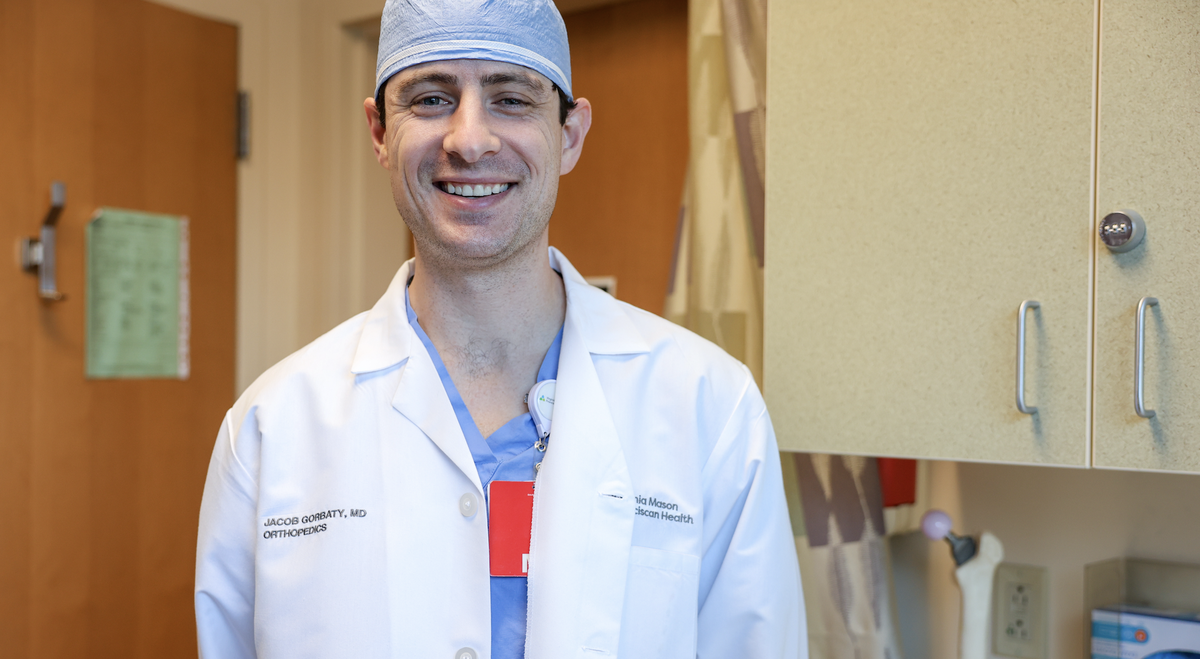
“We are building an elite program here, centered around the patient. Ultimately, this technology is about precision, enhancing patient safety, and achieving superior outcomes,” Gorbaty said in a recent VMFH release.
In an interview with The News Tribune, Gorbaty explained how he and St. Clare came to debut the new technology.
“St. Clare was one of the first hospitals in the region to be doing robotic hip and knee surgery,” he said. “I think perhaps there were already forward thinkers here leading the way with innovation and technology, with a patient at the center of the focus.”
In 2019 The News Tribune profiled Dr. Joshua Johnston’s use of a robotic assistance in knee and hip replacement surgeries at the hospital.
Before beginning his practice in Pierce County, Gorbaty was discussing the technology with local medical staff, including St. Clare Hospital president Matthew Metsker and Johnston, now his partner..
Gorbaty, who grew up in Tacoma, previously practiced in the Mount Vernon-Anacortes area.
“This has been a two-year process to get to this point,” he added. “Having the data to support it, having the right patient population and the practice to support it, was a big part of it as well. … The people who led the way in front of me made it happen for our patients.”
Anatomic and reverse shoulder replacements are two different surgical approaches used to treat joint arthritis or severe fractures.
Gorbaty explained that so far the robot-assisted technique works for reverse shoulder replacement, which is generally performed in the absence of a functional rotator cuff. The next step is getting the robotics to a level of performing anatomic shoulder surgery, which generally includes a healthy rotator cuff.
“This is for implant placement and bone preparation,” he explained. The implants “have to be at the right angle, in the right position. So we get 3D CT scans after I see a patient in clinic, after we’ve decided that we’re going to go forward with the shoulder replacement, and then we design our implants custom to match the patient’s anatomy, and we do our plan that way.”
The robotic-assisted portion “makes it very, very precise, so you can be almost guaranteed that what you have planned on a 3D CT scan is exactly what the patient gets,” in terms of placement.
The addition of this feature adds about 10 minutes to the surgery, he noted, “but that time is well worth it for the amount of accuracy and the benefit that the patient gets.”
“The more you can take human error out of the equation, the better it is going to be for the patient,” he added. While recovery times can vary, “Anecdotally, several surgeons who have done this so far, including myself, are reporting that some of their patients, at least in the early post-operative time, seem to have slightly faster recovery.”
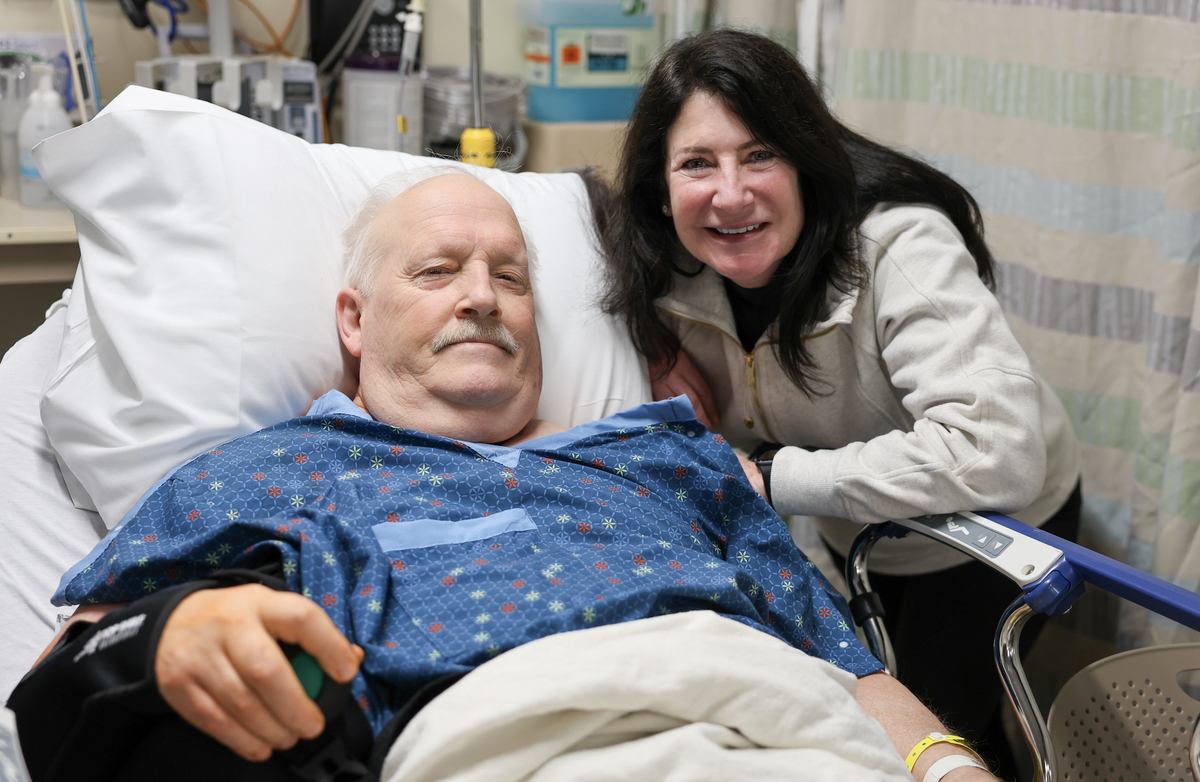
Gorbaty’s first patient to undergo the surgery in Washington state, Chris Anderson, said in a statement that he felt he’d exhausted all his options before moving on to surgery, and that it had become “embarrassing” to ask people for help in the simplest tasks, even putting on a shirt.
“When I woke up, it felt like I had just closed my eyes for surgery. The next thing I knew I was going home the same day,” he told a VMFH representative on Thursday, who shared Anderson’s comments with The News Tribune.
“Today, I feel great. I started physical therapy about a week ago, and it is showing me where I need to focus. But overall, I am doing really well and already seem to be regaining range of motion and strength,” he added.